


Description
Fundamentals of Dyes and Pigments:
Dyes and pigments are essential components of the coloration industry, serving various applications in textiles, paints, inks, plastics, and more. They are responsible for providing color to a wide range of products we encounter in our daily lives. Understanding the fundamentals of dyes and pigments is crucial to grasp their differences and applications.
Dyes:
Dyes are colorants that impart color to substrates through a process called dyeing. They are typically soluble in water or other solvents, allowing them to be easily absorbed by the material they are applied to. The dye molecules have a high affinity for the substrate’s surface, forming strong chemical bonds or physical interactions, leading to excellent color fastness. Dyes are commonly used to color textiles, paper, leather, and other materials. They exist in various forms, such as natural dyes derived from plants and animals, as well as synthetic dyes produced through chemical processes.
Natural Dyes:
Natural dyes are derived from plant, animal, or mineral sources. They have been used for centuries and were the primary source of color before synthetic dyes were developed. Examples of natural dyes include indigo (from the indigo plant), cochineal (from insects), and madder (from the roots of the madder plant). Natural dyes often have subtle and earthy colors, but they can be less consistent and may fade over time.
Synthetic Dyes:
Synthetic dyes are chemically synthesized compounds created in laboratories. They were developed in the mid-19th century and revolutionized the textile industry by offering a wider range of vibrant and stable colors. Synthetic dyes are more predictable in terms of color consistency and fastness (resistance to fading). They can be categorized into various types, including azo dyes, anthraquinone dyes, and phthalocyanine dyes, each with its own chemical structure and properties.
Differences between Natural and Synthetic Dyes:
Source:
Natural dyes are derived from plants, animals, or minerals, while synthetic dyes are chemically manufactured.
Color Range and Consistency:
Synthetic dyes offer a broader and more consistent range of colors compared to the often limited and subtle colors of natural dyes.
Color Fastness:
Synthetic dyes generally exhibit better color fastness and resistance to fading when exposed to light, washing, and other environmental factors.
Production and Environmental Impact:
Natural dyes are generally considered more environmentally friendly as they are derived from renewable resources. Synthetic dye production can involve chemicals and processes that may have a higher environmental impact.
Cost and Availability:
Natural dyes can sometimes be more expensive and less readily available due to their reliance on specific sources and extraction processes. Synthetic dyes are often more cost-effective and widely accessible.
Cultural and Historical Significance:
Natural dyes have cultural and historical significance in various traditions and communities, often tied to traditional craftsmanship. Synthetic dyes marked a significant technological advancement and transformed the textile industry.
It’s important to note that both natural and synthetic dyes have their own advantages and drawbacks. The choice between them often depends on factors such as color requirements, durability, sustainability, and cultural considerations.
Instructions for solvent dyes
1. Product profile: High grade plastic colorant is the most ideal colorant of all kinds of plastics, which has the
advantages of strong coloring power, good heat resistance, high sun resistance, acid alkali resistance and bright
color. At present, it is widely used in the coloring of daily plastics, yarn pipe materials, industrial grease, paint ink, color masterbatch, etc. some varieties are suitable for chemical fiber, polyester, nylon, acetate fiber and other colored spray wires.
2. Scope of use: The advanced plastic colorant belongs to the category of oil-soluble dyes which can be dissolved in organic solvents. It can be used in monochrome or can be used after various hues are prepared according to certain proportion according to the needs. All of them are suitable for dyeing of the following plastics.
(PS) polystyrene
(PC) polycarbonate
(HIPS) high impact polystyrene
(UPVC) rigid PVC
(PMMA) polymethylacrylic acid methylacetate (SAN) styrene acrylonitrile copolymer
(SB) styrene butadiene copolymer
(AS) acrylonitrile styrene copolymer (ABS) acrylonitrile butadiene styrene copolymer (372) styrene methylacrylic acid copolymer (CA) cellulose acetate
(CP) cellulose propylene
3. Dye applications: When the dyes are dissolved in the melt of plastics, they are distributed in a certain molecular form. When coloring various plastics, a certain proportion can be directly added into the plastic and mixed evenly to pre plastic or molded, and the hue concentration can be mixed according to the demand. In transparent and clean resin, dyes can obtain bright transparent colors. If used in combination with appropriate titanium dioxide and dyes, translucent or opaque hues can be obtained. The amount can be agreed according to the needs. The general dosage of transparent tone is 0.02% to 0.05%, and the normal amount of opaque tone is about 0.1%.
4.Quality index: The heat resistance performance reaches 240 °C -300 °C respectively The fastness to sun is 6-7 and 7-8 respectivelyThe migration resistance reaches 3-4 and 4-5 respectively 100% ± 3% of the coloring strength Water
Pigments:
Pigments are also colorants, but unlike dyes, they are insoluble in the medium in which they are dispersed. Instead of being absorbed, pigments are suspended in the medium, creating a dispersion of fine particles. They provide color by selectively reflecting and absorbing light, depending on the pigment’s specific properties. Pigments are widely used in the manufacturing of paints, inks, plastics, and other materials. Due to their insolubility, they offer superior color stability and resistance to environmental factors, making them ideal for outdoor applications. There are several types of pigments, each with distinct characteristics and applications:
Organic Pigments: These are carbon-based pigments derived from organic compounds. They are often used in inks, paints, plastics, and textiles. Examples include phthalocyanines (used in printing inks), quinacridones (used in automotive coatings), and azo pigments (used in various applications).
Inorganic Pigments: These are minerals or metal-based pigments. They are durable and offer a wide range of colors. Examples include titanium dioxide (used in paints and coatings), iron oxides (used in construction materials), and cadmium pigments (used in plastics and ceramics).
Natural Pigments: Derived from natural sources like plants, minerals, and animals. Examples include indigo (from plants, used in textiles), ochre (from minerals, used in paints), and carmine (from insects, used in cosmetics).
Synthetic Inorganic Pigments: These are manufactured compounds with controlled properties. For instance, cobalt blue and cobalt violet are used in ceramics, glass, and artists’ materials.
Special Effect Pigments: These create unique visual effects like metallic, pearlescent, and fluorescent colors. They’re often used in automotive coatings, cosmetics, and packaging.
High-Performance Pigments (HPPs): Known for their excellent stability and durability, they’re used in demanding applications like automotive coatings and industrial paints.
Phosphorescent and Fluorescent Pigments: These pigments absorb and emit light, making them useful in glow-in-the-dark products, safety signage, and high-visibility materials.
Thermochromic and Photochromic Pigments: These pigments change color in response to temperature or light exposure. They’re used in novelty items, textiles, and packaging.
Pigment Dispersions: Pigments are often dispersed in liquids to create inks, paints, and coatings.
Each type of pigment has specific applications based on its properties. For example, titanium dioxide is a white pigment used in paints, cosmetics, and food products. Iron oxide pigments are used for coloring concrete and other construction materials. Organic pigments find applications in printing inks and plastics. Natural pigments have been historically used in art and cultural artifacts. Special effect pigments create eye-catching finishes in automotive and cosmetics industries.
Keep in mind that pigment applications can vary based on industry and evolving technologies.
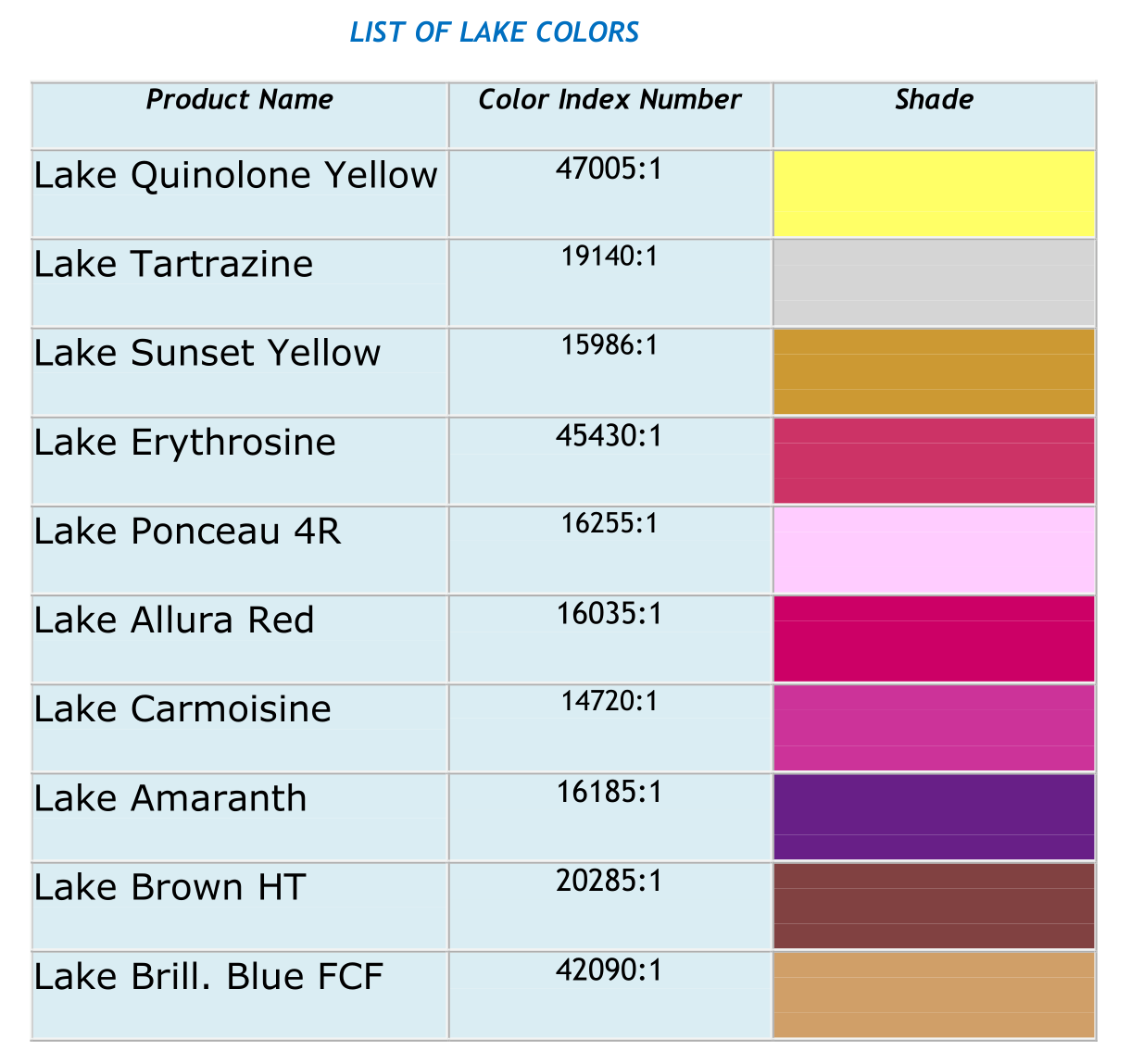
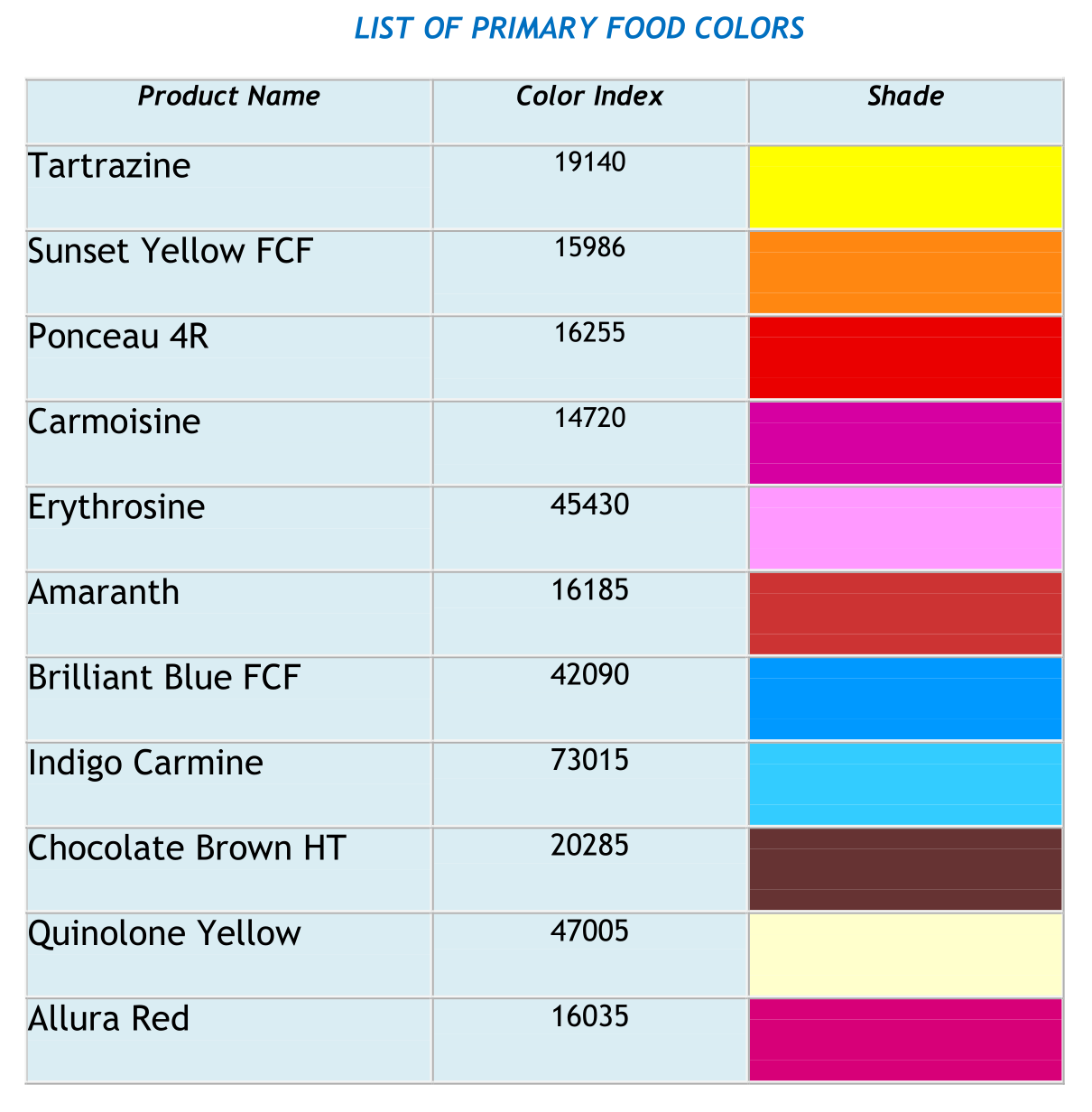
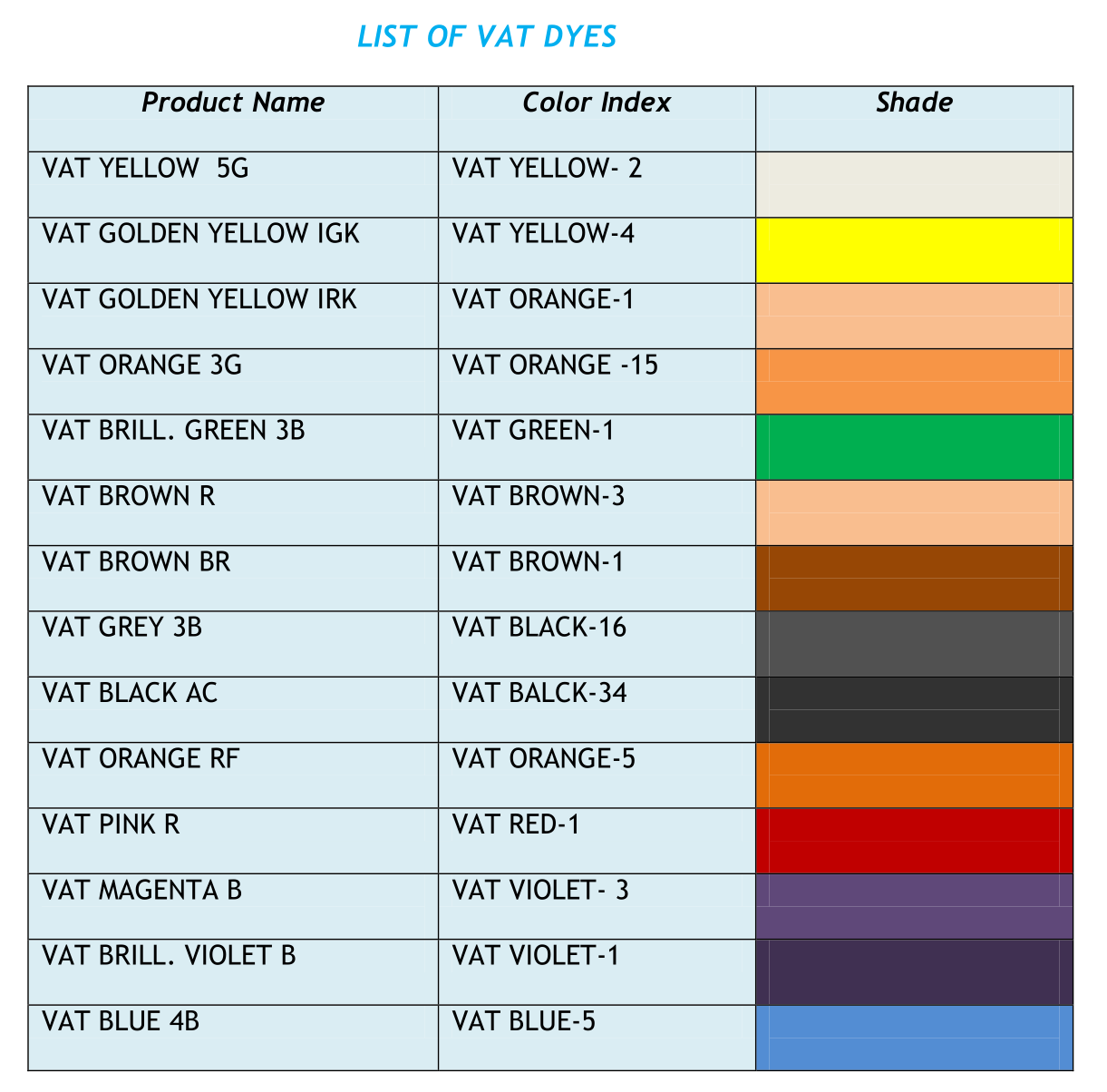
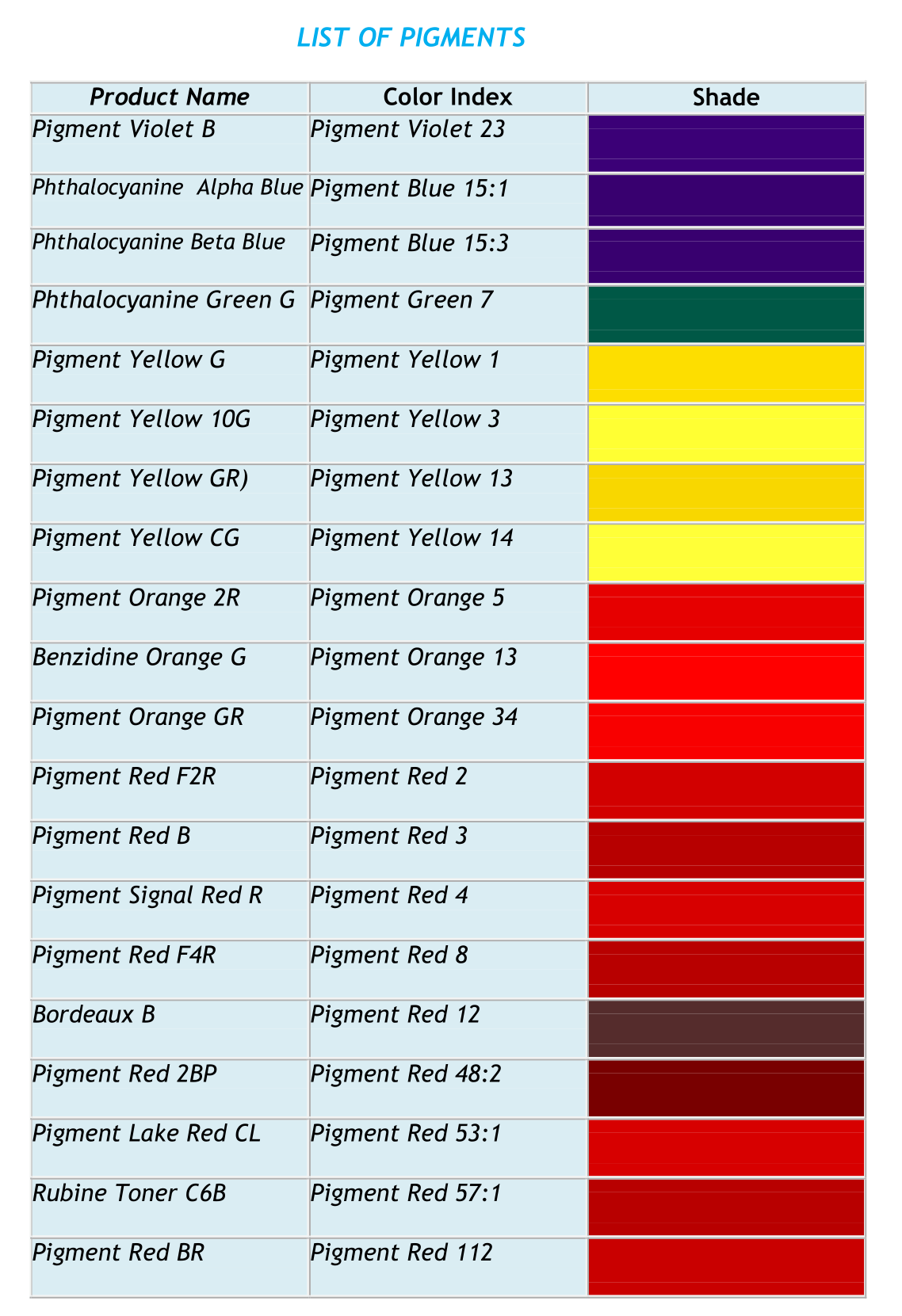
In summary, dyes are soluble colorants that are absorbed into substrates, commonly used for dyeing textiles and other materials. Pigments, on the other hand, are insoluble colorants dispersed in a medium, widely used in paints, inks, and plastics for their stability and opacity. Each has its unique advantages and applications within the coloration industry.
For more information please check this PDF => Dyes